The Birth of a Volcanic Island
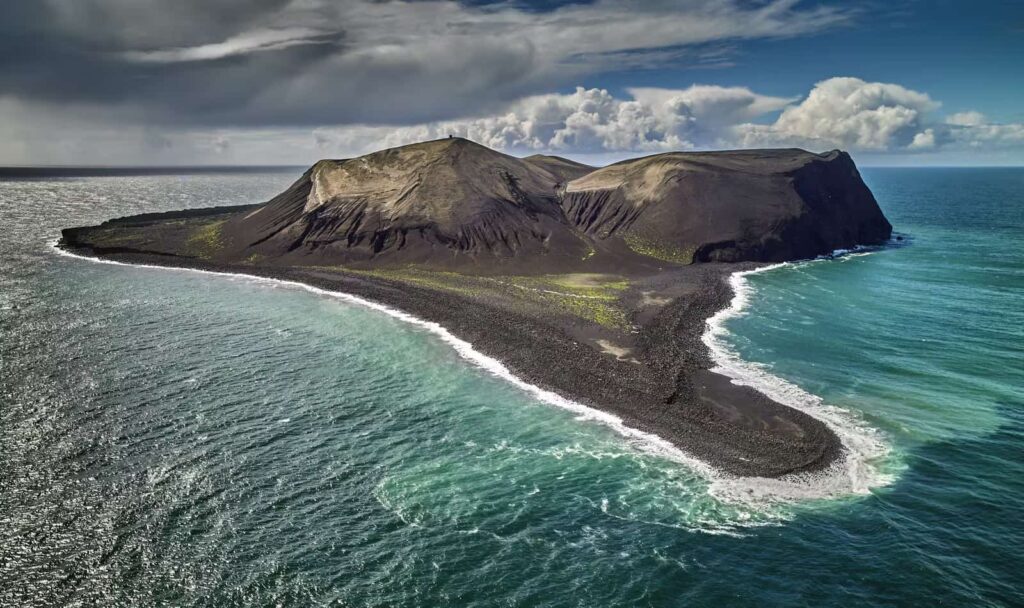
Off the southern coast of Iceland, a rare natural phenomenon unfolded dramatically on November 14, 1963. Fishermen spotted a towering dark plume rising from the Atlantic Ocean, initially mistaking it for a burning boat. Instead, a volcanic eruption was underway beneath the sea, 426 feet below the surface. This eruption marked the birth of a new island—Surtsey—a volcanic marvel rising from the depths to offer humanity an unprecedented natural laboratory for studying how life colonizes barren terrain.
Surtsey’s fiery emergence and subsequent ecological evolution have fascinated scientists and nature enthusiasts alike. Declared a nature reserve from the outset and later designated a UNESCO World Heritage Site, Surtsey remains one of the most pristine and carefully studied sites on Earth. Its story is a compelling testament to nature’s resilience and the processes that shape ecosystems from nothingness.
The Volcanic Formation of Surtsey Island
Surtsey’s creation began deep beneath the ocean’s surface along the Mid-Atlantic Ridge, part of the Vestmannaeyjar submarine volcanic system near Iceland. The eruption started underwater on November 14, 1963, at a depth of approximately 130 meters (426 feet), where immense water pressure initially suppressed explosive activity.
Gradually, volcanic material accumulated, pushing upwards until it breached the sea surface. By November 24, 1963, the island measured roughly 900 by 650 meters as explosive eruptions hurled ash, lava, and volcanic rock skyward in towering columns reaching heights of 10 kilometers. The violent interaction of magma with seawater produced phreatomagmatic explosions, scattering volcanic debris over a wide area.

Initially, the island was a loose agglomeration of scoria and volcanic ash, highly vulnerable to erosion by harsh North Atlantic storms. However, the eruption continued intermittently until June 5, 1967, with lava flows eventually solidifying the island’s structure and giving it greater resistance to erosion. At the end of the eruption, Surtsey covered about 2.5 square kilometers (approximately one square mile) with its highest point reaching 174 meters (571 feet) above sea level.
Other volcanic features also formed nearby during this period, including the seamount Surtla, but these smaller islands were quickly eroded by the ocean. Surtsey remains the only lasting volcanic island from this eruption sequence, preserving a unique geological record of its birth and growth.
Early Scientific Interest and Protection
From the moment Surtsey emerged, scientists recognized the extraordinary research opportunities it presented. Unlike other islands with long histories of human impact, Surtsey’s newness provided a rare chance to witness primary ecological succession—the natural process by which life colonizes barren land.
To ensure the island remained a pristine natural experiment, Icelandic authorities declared Surtsey a protected nature reserve in 1965, just two years after its formation. Access was strictly limited to a select group of researchers, minimizing human disturbance and preserving the integrity of this living laboratory.
A grid of benchmarks was established to monitor changes in the island’s shape and size over time, scientific sampling protocols were developed to track colonization processes, and interdisciplinary studies involving volcanologists, botanists, entomologists, and ecologists commenced almost immediately.
Primary Ecological Succession on Surtsey Island
Understanding Primary Succession
Primary succession refers to the colonization and development of ecosystems on previously lifeless areas without soil, such as volcanic islands or glacier retreats. Since Surtsey rose from bare volcanic rock, it became the textbook example of this process.

Pioneer Species Arrival
The first colonizers on Surtsey were microscopic organisms—bacteria, algae, and fungi—delivered by wind, ocean currents, and birds. Spores and seeds arrived gradually, often piggybacking on insects and birds. The earliest visible plant species included hardy mosses and liverworts capable of surviving in nutrient-poor conditions.
The Role of Birds and Nutrient Enrichment
Birds played a crucial role in accelerating ecological succession. Seabirds began nesting on Surtsey, bringing organic matter in the form of guano and uprooted vegetation. This nutrient input enriched the developing soil, facilitating the establishment of vascular plants—flowering plants and grasses—that would follow.
Over decades, the island shifted from barren volcanic rock to patches of soil teeming with diverse flora and fauna. Complex interactions formed between species, marking the gradual emergence of a functioning ecosystem.
Biodiversity and Ecosystem Development
Plant Colonization and Diversity
Since 1967, researchers have documented the arrival and establishment of more than 70 vascular plant species, alongside a wide variety of mosses and lichens. The vegetation cover has steadily increased, transforming Surtsey’s surface from rocky wasteland into habitat for more complex life forms.
Fauna: Invertebrates and Birds
Invertebrates such as insects and spiders have colonized the island, contributing to pollination and nutrient cycling. Seabirds remain dominant, supported by rich marine feeding grounds. Bird populations help sustain the ecosystem by continuously distributing seeds and nutrients.
Current Ecological Status
Today, over 50 years after its formation, Surtsey hosts a complex ecosystem with established vegetation communities and diverse animal life. While still evolving, the island serves as a rare window into the natural dynamics of ecosystem assembly and resilience.

Conservation and UNESCO World Heritage Status
Recognizing its global scientific and natural importance, UNESCO designated Surtsey a World Heritage Site in 2008. The site epitomizes the value of protecting pristine environments for ecological research and conservation.
Strict regulations continue to limit public access, allowing only approved scientists to study the island under stringent conditions. This protection preserves Surtsey’s role as one of the best examples of natural primary succession in the world, unaffected by human interference.
Island management focuses on preventing invasive species introduction, monitoring erosion, and supporting long-term ecological research.
Scientific Discoveries and Contributions
Surtsey has provided invaluable insights into ecological principles and succession theories. Researchers have:
-
Tracked species colonization rates and pathways in real-time.
-
Studied the interplay between physical factors (soil, erosion) and biological colonizers.
-
Observed the critical role of animal vectors like birds and insects in ecosystem development.
-
Investigated soil formation processes from bare rock to mature soils capable of supporting complex plant life.
These findings have applications beyond volcanic islands, informing restoration ecology, conservation strategies, and understanding ecosystems’ responses to environmental changes.
Surtsey Compared to Other Volcanic Islands
Unlike other volcanic islands often influenced by human activity, Surtsey remains untouched, allowing uninterrupted ecological observation. Its complete isolation sets it apart as a unique benchmark for studying natural ecological processes.
Lessons from Surtsey also help evaluate ecosystem resilience and recovery, offering models useful for global conservation and habitat restoration efforts.
Conclusion: A Testament to Nature’s Resilience
Surtsey is much more than a volcanic island; it is a living symbol of nature’s ability to create life from fire, rock, and water. Its formation, ecological succession, and preservation as a world heritage site reflect the dynamic processes shaping our planet.
For scientists and nature lovers worldwide, Surtsey offers an unparalleled glimpse into the miracle of life building itself from nothing. The island continues to inspire respect for the delicate balance of ecosystems and the importance of preserving natural laboratories where the story of life unfolds uninterrupted.
ALSO READ: Jericho: The World’s First Walled City and Cradle of Civilization