The Enigma of Western Mexico’s Grandest Site
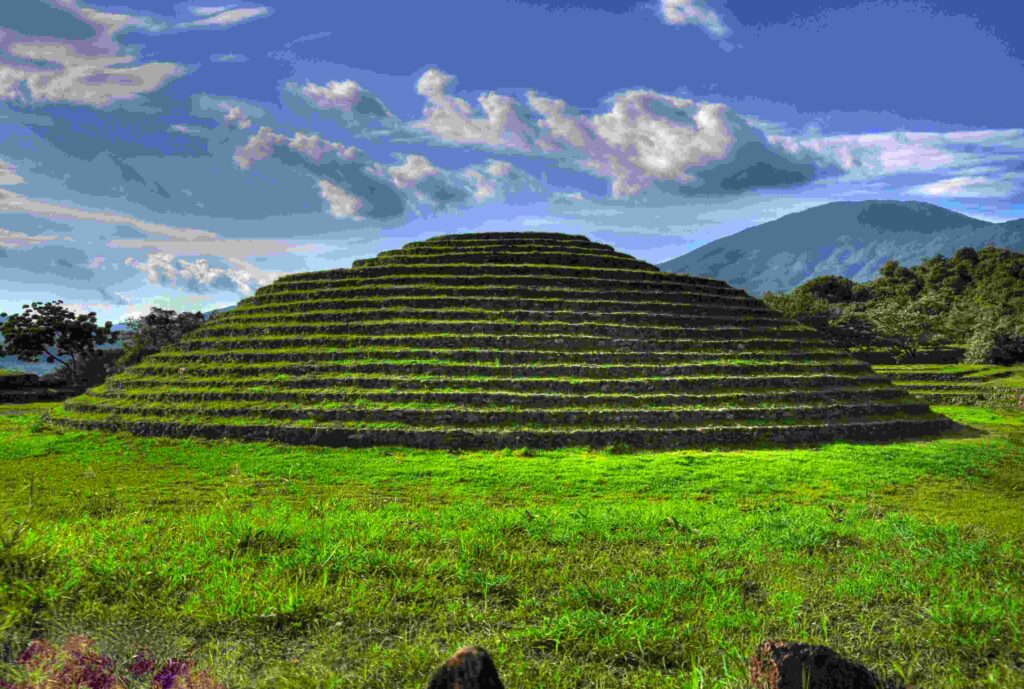
Los Guachimontones, located near the town of Teuchitlán in the Mexican state of Jalisco, stands as the most important and largest Late Formative to Classic period (approximately 300 BCE to 450/500 CE) pre-Columbian archaeological site in Western Mexico. This immense settlement offers a unique glimpse into a complex, ancient society known as the Teuchitlán Tradition, a culture that flourished outside the major established centers of the Mesoamerican heartland.
Unlike the towering, square-based pyramids of the Maya or the Aztecs, Los Guachimontones is instantly recognizable for its strikingly distinct circular ceremonial architecture. The site, covering an area of approximately 19 hectares with numerous house mounds and terraced hillsides, challenges traditional narratives of Mesoamerican civilization and has become a crucial focus for understanding the region’s ancient past.
The Teuchitlán Tradition: A Unique Mesoamerican Culture
The architecture and cultural footprint of Los Guachimontones are the defining features of the Teuchitlán Tradition, a regional phenomenon confined mostly to the fertile valleys of Jalisco.
Chronology and Development
The site’s primary period of occupation aligns with the Late Formative through the Early Classic period.
-
Late Formative (c. 300 BCE – 200 CE): The construction of the earliest and largest circular complexes began. This was a period of increasing social complexity and regional consolidation.
-
Classic Period (c. 200 CE – 450/500 CE): The tradition reached its apogee. The major ceremonial areas were actively used and maintained, reflecting a strong, centralized religious and political system.
-
Post-Classic Decline (After 500 CE): The main ceremonial complexes were abandoned, although the area was continuously, if sparsely, occupied until the Spanish conquest. The reasons for the collapse of the Teuchitlán Tradition around 500 CE are still debated, though environmental and internal factors are key theories.
Agricultural and Economic Base
The society of Teuchitlán was primarily agricultural, capitalizing on the rich volcanic soil of the area. They developed sophisticated systems, possibly including chinampas (floating gardens) or intensive terrace farming on the surrounding hillsides, to support their large, dense population. Control over resources, particularly the valuable obsidian found in nearby volcanic fields, likely contributed significantly to the region’s wealth and influence. Obsidian was a vital commodity used for tools, weapons, and trade across Mesoamerica.
The Architecture of Ceremony: Circular Pyramids
The most iconic feature of Los Guachimontones is the Guachimontón itself: a monumental circular arrangement that defines the ceremonial core of the site.
Structure of a Guachimontón
Each major Guachimontón is a geometrically precise assembly built for public ritual and administration:
-
The Central Circular Pyramid: A tiered, concentric pyramid forms the core. It typically has stairways leading up to the apex.
-
The Patio (Circular Courtyard): A large, flat, circular space surrounds the central pyramid. This courtyard was the primary area for public ceremonies, dances, and possibly political gatherings.
-
The Bases (Perimeter Platforms): Ranging from four to twelve rectangular platforms, these structures are set on the circumference of the Patio. These platforms are theorized to have held the residences of the ruling elite, temples, or served as viewing stands for spectators.
-
The Paseo (Circular Causeway): A low, wide circular wall or walkway often separates the residential/platform zone from the outer areas.
The meticulous, concentric design suggests a cosmological significance. The circle, a fundamental shape, may represent the cyclical nature of time, the movement of the sun and stars, or the sacred calendar. The structures likely mirrored a societal structure that was rigidly organized around ritual and religious authority.
Major Ceremonial Areas
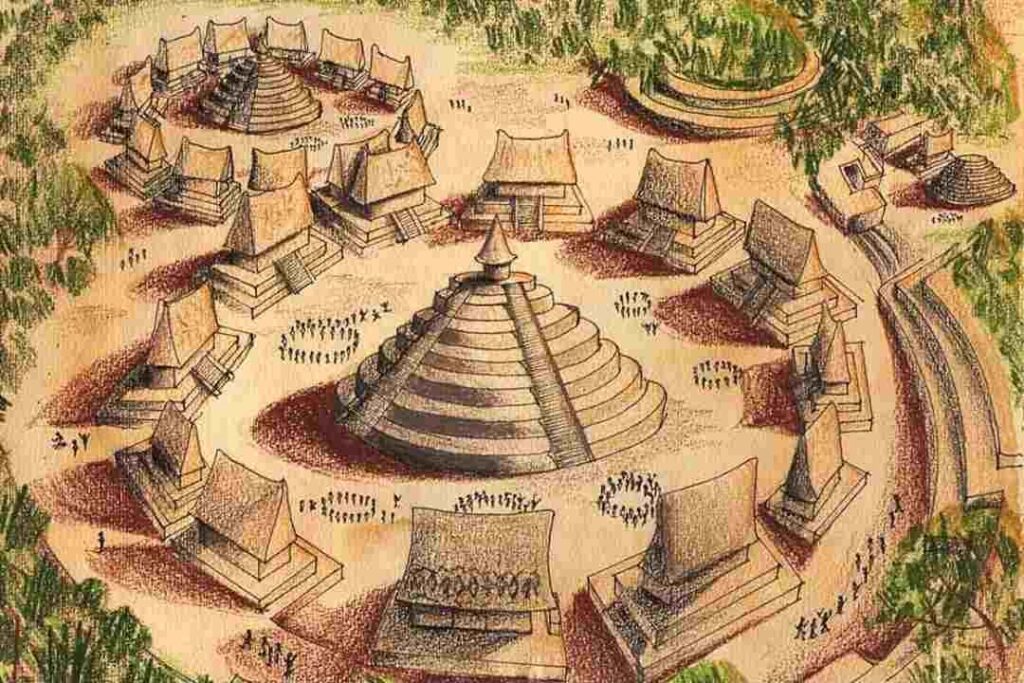
The site is divided into two primary ceremonial areas and numerous surrounding house mounds, covering approximately 19 hectares:
-
Circle 1 (The Grande): This is the largest and most complex circular arrangement, featuring a high central pyramid. Its size and central location suggest it was the most important ritual and political focal point of the entire region.
-
Circle 2 (La Iguana): While smaller, this complex is equally important and well-preserved. It demonstrates the replicability of the Teuchitlán architectural model, suggesting a standardized, powerful religious ideology.
Ritual Life and Cosmology at Los Guachimontones
The unique architecture points toward a distinctive set of religious practices that were central to the Teuchitlán identity.
The Pole of Volador
A key theory regarding the function of the circular structure centers on the Volador Ceremony (Danza de los Voladores or ‘Dance of the Flyers’). Although the modern tradition is often associated with later cultures, the central pole atop the main pyramid may have supported a massive mast for this ritual.
-
Ritual Significance: The ceremony involves participants climbing a tall pole and then, tied to ropes, launching themselves to circle the pole descending headfirst. This is a profound cosmological ritual symbolizing the descent from the heavens. The turning of the calendar, and the fertility of the earth. The circular courtyard would have provided the perfect viewing area for this dramatic, high-stakes performance.
Burials and the Shaft Tombs
While the circular pyramids define the visible surface architecture. The Shaft Tomb Tradition is a contemporaneous and related cultural phenomenon of Western Mexico. Which may offer insight into the beliefs surrounding the afterlife and elite status at Guachimontones.
-
The Tombs: These burials consisted of deep vertical shafts, sometimes reaching over 15 meters, leading to one or more chambers where the dead were interred.
-
Grave Goods: The tombs are famous for incredible ceramic offerings, especially hollow-form sculptures depicting detailed scenes of daily life, battles, and ballgames. These ceramics—though slightly predating or overlapping the major phase of Guachimontones. Show a sophisticated society obsessed with status, ritual, and representation. While the classic shaft tombs are slightly older than the peak of the Guachimontón structures. They represent the ancestral traditions that heavily influenced the society that built the great circles.
The Rediscovery and Legacy of a Lost World
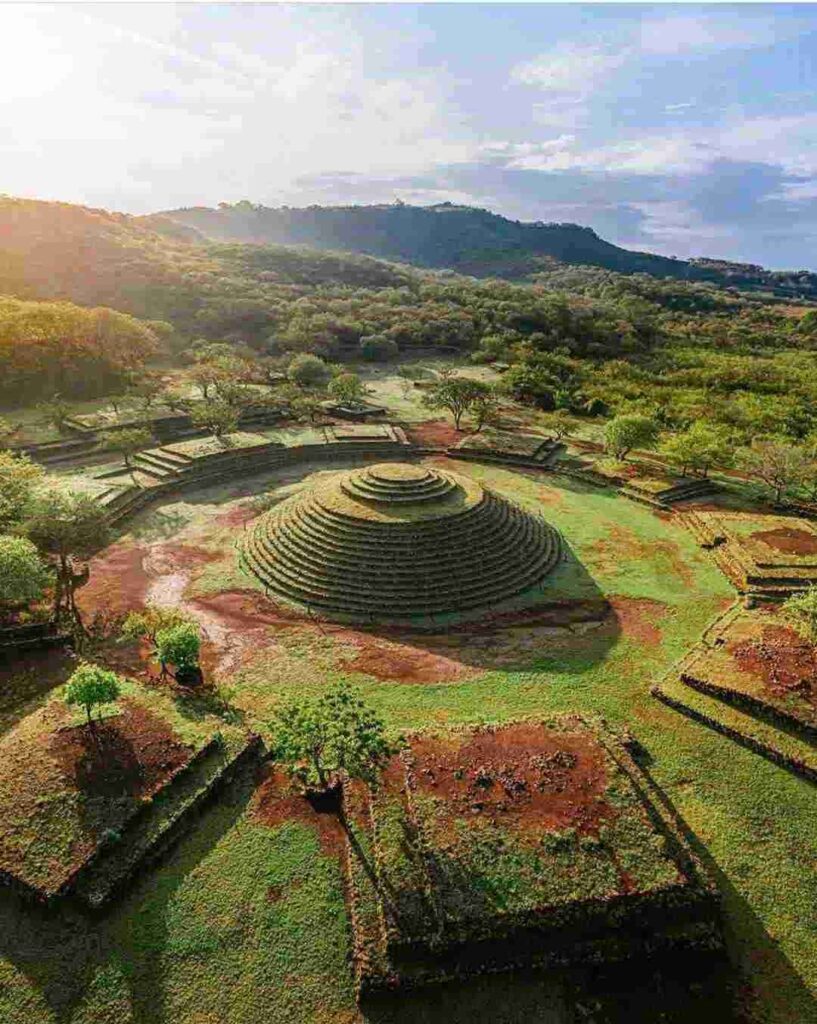
Los Guachimontones was largely unknown to the outside world until the 20th century. Having been protected by its remote location and the local populace.
The Role of Phil Weigand
The site’s global recognition is owed almost entirely to the groundbreaking work of American archaeologist Dr. Phil C. Weigand and his wife, archaeologist Araceli von Gavel.
-
Survey and Excavation: Starting in the early 1970s, Weigand’s extensive survey and decades of excavation established the chronology, cultural distinctiveness, and monumental scale of Los Guachimontones and the Teuchitlán Tradition. His work successfully brought this unique culture out of archaeological obscurity. Showing that Western Mexico had developed complex societies independent of, and concurrent with, centers like Teotihuacan.
-
The Importance of Uniqueness: Weigand’s research emphasized that the Teuchitlán Tradition was not simply a provincial offshoot of a larger Mesoamerican culture but a unique, sophisticated civilization that developed its own architectural forms and political systems.
Preservation and Tourism
Today, Los Guachimontones is an important cultural heritage site.
-
The Interpretive Center: The Centro Interpretativo Guachimontones “Phil C. Weigand” (CIG) provides visitors with essential context, showcasing artifacts, models of the site, and information on the Teuchitlán Tradition’s daily life, economy, and cosmology.
-
A Symbol of Jalisco: The circular pyramids have become a potent symbol of the history of Jalisco, drawing tourists and researchers from around the globe eager to witness this singular pre-Columbian marvel.
Conclusion: A Challenge to Mesoamerican Orthodoxy
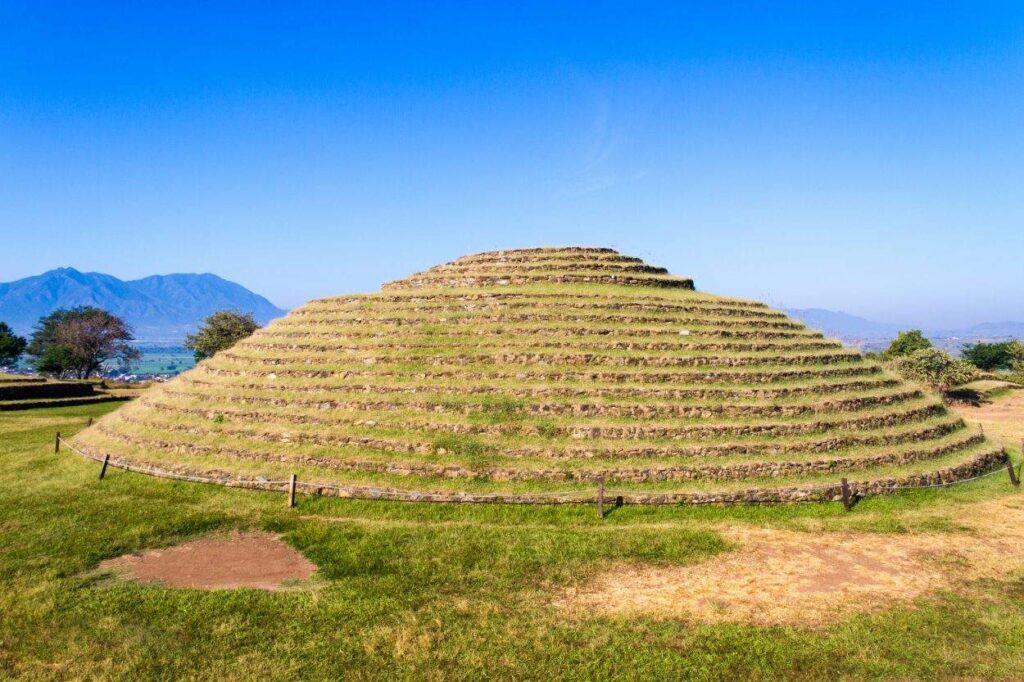
Los Guachimontones stands as a powerful testament to the diversity and ingenuity of ancient Mesoamerican civilizations. The sheer scale and geometric precision of the circular pyramids. Covering 19 hectares of monumental public and private space, including two major ceremonial areas, numerous house mounds, and terraced hillsides. Represent a profound achievement of engineering and social organization during the Late Formative to Classic periods.
The site is not just a collection of stone structures; it is the definitive expression of the Teuchitlán Tradition. A distinct culture that mastered its environment. Established extensive trade networks (especially in obsidian), and developed a unique ritual architecture centered on the cycle of the cosmos. Its study continues to inform our understanding that Mesoamerica was a mosaic of interconnected. Yet highly individualistic, societies, each contributing to the region’s rich cultural tapestry. The mystery of its sudden decline around 500 CE only adds to the allure of this extraordinary archaeological treasure.
ALSO READ: Cornalvo Reservoir: Ancient Roman Marvel and Ecological Treasure in Extremadura, Spain