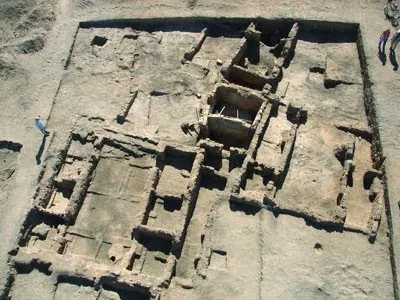
Long before empires and writing, before large armies with metal weapons marched across the region, there stood a settlement in northern Syria—a settlement whose name is lost to history but whose ruins speak eloquently of one of the earliest acts of urban warfare. That city is Hamoukar, located in today’s northeastern Syria near the Iraqi border. Archaeologists first began excavating Hamoukar in 1999, and their findings have painted an extraordinary picture of life, trade, craft, complexity —and a brutal destruction by siege around c. 3500 B.C.
What makes Hamoukar exceptional isn’t merely its early urban nature, but the sheer force of its destruction: thousands of clay sling‐bullets raining on its walls, collapsed administrative buildings, thick ash layers and graves of victims in the rubble. These signs point to one of the earliest known large-scale organised attacks on an urban settlement. The key question remains: who laid siege to Hamoukar — and why? The attackers left no written record, so we must rely on archaeology, context and inference to piece together the past.
In this article we explore the rise of Hamoukar, its economic and strategic role, the archaeological evidence of its devastating end, the possible identities and motives of its attackers, and the legacy of the site for our understanding of early urbanism and warfare.
Setting the Scene: Hamoukar in the 4th Millennium B.C.
Location and environment
Hamoukar lies in the Upper Mesopotamian region of northern Syria (the Jāzīra), not far from the modern border with Iraq. The site is a tell (a mound of successive settlements) that in antiquity occupied an advantageous position along a major trade/communication route linking Anatolia (modern Turkey) through northern Syria, across the Tigris region, down into southern Mesopotamia.
Though not built immediately on a major river branch (unlike many other early Mesopotamian cities), Hamoukar benefited from its landscape and access to resources and trade.

Urban development: size, craft and economy
Excavations and survey show that Hamoukar had a long history of occupation: by the late 4th millennium B.C. it had grown into a sizeable settlement (the tell is large, with the city at its height around c. 2600 B.C. reaching tens of hectares).
A key feature of Hamoukar was craft production and long-distance trade. For example, lots of obsidian fragments and cores were found well away from natural sources — indicating that Hamoukar processed obsidian brought from Anatolia (over 70 miles away) and possibly exported finished tools.
The existence of industrial‐scale installations, administrative buildings, large mud‐brick walls and fortifications all attest to a robust urban society that required organisation, labour, and possibly centralised governance.
A city with walls
One of the striking features of Hamoukar is its defence architecture. The ruins show that the settlement was walled. These fortifications, typical of early urban centres, suggest that Hamoukar anticipated or experienced conflict. The very need to build walls implies threats — whether internal, external, or both.
Cultural and chronological context
Hamoukar sits chronologically in the Late Chalcolithic / Early Bronze Age transition. Its destruction layer is placed around c. 3500 B.C., and the subsequent layers above show influences of the southern Mesopotamian Uruk culture (c. 3500-3000 B.C.).
This means that northern Mesopotamia (the Jāzīra region) was not simply a passive recipient of culture from the south, but had its own complex, independent developments—including urbanisation, craft specialisation, trade networks and fortifications.
Evidence of the Siege: Signs of Warfare at Hamoukar
Discovery of sling‐bullets, collapsed walls and fire
When archaeologists began excavating Hamoukar, they uncovered a scene of destruction: thick ash layers, collapsed mud-brick walls, burnt roofs, large numbers of clay sling-projectiles (sometimes called “sling bullets”), and the remains of what appear to be hastily buried human victims.
In one season (2005–06), the team found more than 1,000 egg‐shaped clay slingshot projectiles in rooms whose walls were up to six feet high, mixed in with the collapse debris of burnt buildings.
One key discovery: a sling bullet that had literally pierced the plaster of a mud-brick wall, showing live impact during the attack.
Ammo manufacture during the siege
Perhaps the most telling evidence of internal desperation: in one room archaeologists found a shallow pit used normally for soaking discarded clay sealings, but in this context lined with two dozen sling bullets neatly placed along its edge—indicating that in the final hours defenders were manufacturing ammunition inside the city.
Graves of battle victims
The team also found graves within the debris of collapsed buildings—12 burial pits containing skeletons which are highly likely to be casualties of the siege rather than standard mortuary practice.
A rapid, intense strike
Based on the evidence—collapsed walls, fire damage, sling‐bullet penetration, hurried ammunition manufacture—archaeologist Clemens Reichel (co-director of the mission) concluded:
“The attack must have been swift and intense. Buildings collapsed, burning out of control, burying everything in them under vast pile of rubble.”
This is not slow attrition: it appears to have been a major assault—walls breached, city overrun, defenders overwhelmed.
Why it’s early evidence of urban war
While sling-bullets are known at other fourth-millennium sites and sometimes interpreted as hunting or ritual projectiles, Hamoukar’s combination of fortifications, high numbers of sling-bullets, fire damage, human casualties, and context of a settlement qualifies it as one of the earliest known sites of urban warfare — a large, built settlement under siege.
Who Attacked Hamoukar? The Perpetrators and Motives
The mystery of the attackers
One of the enduring mysteries of Hamoukar is the identity of the attackers. The city left no written account of the event and its conquerors did not duly record themselves on the walls. Archaeologists must rely on circumstantial evidence.
The Uruk connection: expansion from the south
The layer directly above the destruction layer shows strong material culture ties to the southern Mesopotamian Uruk civilization (c. 3500-3000 B.C.). That suggests that the city fell and was then replaced by Uruk-influenced occupation.
This has led some scholars to suggest that southern forces (Uruk or Uruk affiliated) may have attacked Hamoukar as part of their expansion into northern Mesopotamia. The prize? Control of trade, resources, and strategic routing.
Possible motives: resources, trade and strategic routes
Why attack Hamoukar? The site’s position on major trade routes (linking Anatolia to southern Mesopotamia) meant access to wealth, raw materials, and power.

Specifically:
-
Obsidian production: Hamoukar had a large‐scale obsidian-working industry with raw material imported from afar, suggesting craft specialisation and trade surpluses.
-
Copper tools: By the destruction time, copper was appearing as a key tool material, and Hamoukar may have been part of metal‐tool production networks.
-
Strategic defensive walls: A settlement that invested in walls suggests wealth worth defending—but also wealth worth attacking.
Thus, attackers may have sought to control or disrupt the economic engine of the region, incorporate Hamoukar’s trade networks, or remove a rival urban centre.
Internal vs external actors
While the Uruk hypothesis is dominant, alternate views consider internal conflict, local rivalries, or even nomadic incursions. But given the scale of destruction, the sophistication of weapons (slings), the coordinated manufacture of ammunition and the presence of walls, an organised external attack seems most plausible.
The after-effect: the city replaced and a cultural shift
After the destruction around 3500 B.C., the site shows occupation by Uruk‐style culture, indicating that the attackers (or their successors) took over, repopulated or reworked the city. This helps explain the shift in material culture and urban dominance from the north to the south.
Significance for Early Urbanism and Warfare
Rethinking the origins of organised conflict
Hamoukar pushes the date of organised, mass-scale, urbanised conflict back thousands of years. It tells us that warfare was not a late Bronze Age invention but was possible in the fourth millennium B.C., even before full writing systems were established.
Urbanisation in the north
Traditional models of urbanisation in the Near East often focus on southern Mesopotamia (Sumer, Uruk, etc). Hamoukar shows that northern Mesopotamia (Jāzīra region) was not peripheral but a dynamic region in its own right: urban, craft-based, trading, and sometimes war-faring.
Craft specialisation, trade networks and complexity
The obsidian-working industry, the scale of settlement sprawl, fortifications and strategic position at Hamoukar highlight the increasing complexity of society: specialist production, inter-regional trade, and political organisation. These are the building blocks of state‐level society.
The nature of early weapons
The discovery of thousands of clay sling‐projectiles (many egg‐shaped), some embedded in walls, indicates that slings were effective weapons in siege warfare. The fact that defenders manufactured ammunition inside the city shows the saying “do everything you can” was literal. Experimental archaeology shows that slings can hurl projectiles at lethal velocities.
Implications for “why states form”
One theory of state formation is that urban centres form to coordinate defence and manage resources (water, agriculture, trade). Hamoukar may represent a case where urbanisation was stimulated by craft and trade specialisation rather than just irrigation agriculture; and the presence of warfare suggests that competition, threat and defence may have been part of early state formation.
The Archaeological Campaign and Modern Context
The University of Chicago’s Hamoukar Expedition
The site was excavated beginning in 1999 by a joint team from the University of Chicago’s Oriental Institute and Syria’s Directorate/Department of Antiquities.
Their survey (1999-2001) mapped the settlement’s extent, and subsequent seasons (2005-06) focused on the destruction layers and weapons evidence.
Challenges of preservation in a war-torn region
As the site lies in modern-day Syria, it is vulnerable to modern conflict, looting, and neglect. One article noted that Hamoukar’s monumental importance is threatened by recent instability and construction intrusions.
What remains visible and what has been lost
While much of the city’s earlier levels remain buried beneath the mound, the visible evidence of the destruction layer—walls, ash, projectiles—provides many clues. Yet the lack of writing means we face interpretative limits, and modern war in the region may limit future excavations.
The Great Mystery: Why Was Hamoukar Destroyed?

The immediate motive: seize control of a hub
The simplest explanation is that Hamoukar, being prosperous and strategic, was attacked by a stronger polity seeking to control its trade, craft production and territory. The scale and speed of the attack suggest ambition beyond local raids.
Resource competition and strategic routing
Hamoukar’s access to obsidian, copper tools, trade between Anatolia and southern Mesopotamia could have made it a lucrative target. A southern polity (Uruk culture) expanding northwards may have seen Hamoukar as a rival or resource. The fact that Uruk material appears above the destruction layer supports this.
Defensive failure, technological change and decline
While Hamoukar had walls and could manufacture ammunition, the fact that it fell suggests that the attackers overcame its defences effectively. Perhaps they had superior numbers, technology (experience with siege warfare), or internal dissension within the city made defence untenable.
Why no text? The silent victors
Because this event predates writing (or at least widespread textual records in this region) we have no account from the victors or the vanquished. Unlike later Mesopotamian cities which often left inscriptions about sieges, this early episode remains silent—hence the mystery.
What happened next? A cultural turn
In the aftermath, Hamoukar was re-occupied under Uruk style influence, signalling not just military conquest but cultural assimilation and political re-organisation. The north-to-south shift of cultural dominance may trace back to episodes like Hamoukar’s fall.
What Hamoukar Tells Us About War and Cities in Antiquity
Warfare is ancient—cities invite conflict
Hamoukar reminds us that as soon as human groups built walls, storehouses. Specialised production and trade connections, they also became targets. Urbanisation and conflict seem intertwined from an early date.
Defences and offence: the sling as weapon
The thousands of sling bullets found at Hamoukar show that even in the fourth millennium B.C., projectile warfare was systematic. The fact that defenders manufactured ammunition inside the city emphasises the “all‐hands‐on‐deck” nature of this siege.
Victors rewrite history—but the rubble remains
Because Hamoukar’s conquerors left no textual record, the story is left to archaeology. This teaches us that many early episodes of violence, conquest and change may be invisible unless we look at the material.
Trade, wealth and inequality as triggers of conflict
The craft specialisation, long‐distance trade and accumulation of wealth at Hamoukar may have made it both prosperous and vulnerable. Conflict may not just have been about land or water, but about trade routes, resources, prestige and control.
Early urban collapse and transformation
Hamoukar did not simply vanish. After the destruction it was re-occupied and transformed. This pattern of rise, destruction and re‐organisation is repeated many times in ancient urban history and Hamoukar is an early example.
Hamoukar in the Modern Lens: Preservation and Legacy
Threats from modern conflict and development
As one article noted, the Hamoukar site is threatened by the current war in Syria—not necessarily by shelling but by looting, unchecked construction, development projects and absence of site protection.
Why it matters today
For archaeologists, historians and the general public, Hamoukar offers a powerful glimpse into the human past: the advent of cities. The dawn of organised warfare, trade networks, craft complexity and the vulnerability of civilisation.

How to visit (with caution)
While travel to the region is complicated by security concerns. Awareness of the site and support for heritage protection is vital. The story of Hamoukar is shared heritage of humanity—its siege echoes through time.
Educational value and storytelling
Hamoukar is a memorable case study in lectures, textbooks and documentaries. A city falling long before iron swords and written chronicles; an early “war zone” nearly 5,500 years ago. It challenges our assumptions about when and how warfare began in urban contexts.
Conclusion
The ruins of Hamoukar stand silent but eloquent. They speak of a city that was once bustling with craft and trade, fortified for protection, and ultimately overwhelmed by a swift, violent assault. Thousands of clay bullets, collapsed walls, scorched buildings and hasty graves mark what appears. To be one of the earliest documented sieges in human history.
Though we may never know the name of the attacker (or the defenders), the significance of the event is profound. Hamoukar forces us to reconsider: cities invited conflict long before empires declared wars. Craft and trade could bring both prosperity and peril; and the debris of bullets and burnt bricks may be as telling as any written archive.
In the modern age, as other ancient sites are threatened by war, neglect or development. Hamoukar also carries a warning: heritage is fragile, and without protection we may lose the stones that whisper stories of our distant past.
ALSO READ: Morgan Freeman’s Honeybee Sanctuary: How a Hollywood Icon Became a Champion for Bees