Byrsa C語 Carthage Punic wooden fragment
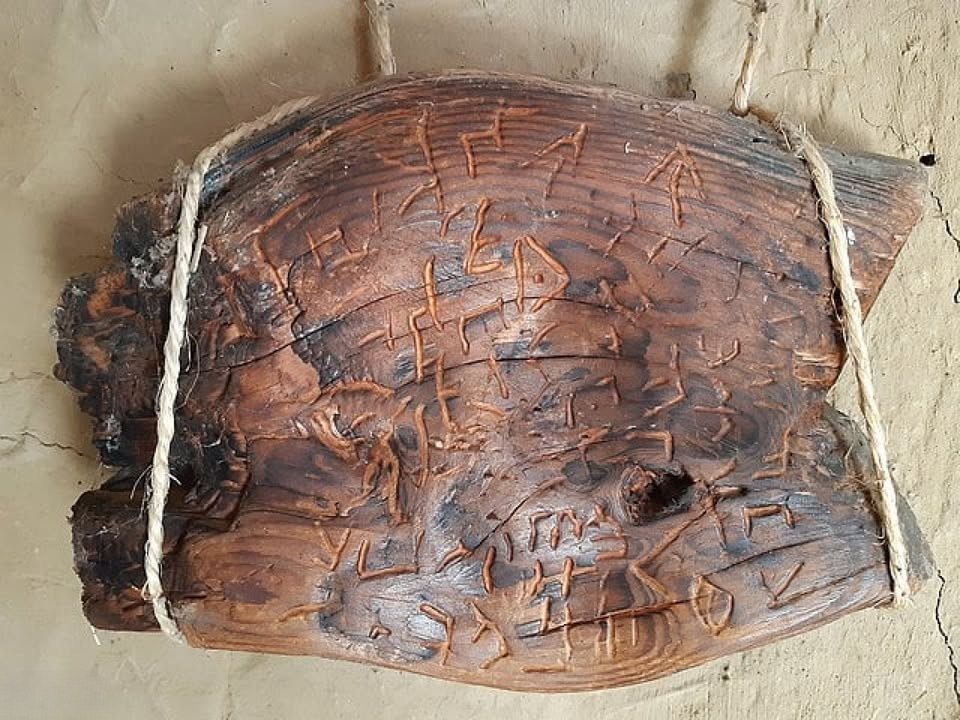
The Byrsa C语 (often transliterated as Byrsa C-fragment), a seemingly insignificant sliver of ancient wood, represents one of the most compelling and paradoxical archaeological finds from the city of Carthage. Discovered on the historic Byrsa Hill, this artifact dates back to the Punic era, likely spanning the 3rd and 2nd centuries BCE—a period marking both the zenith of Carthaginian maritime power and its brutal collision with Rome during the Punic Wars.
This fragment is not just weathered cedar; it is a profound testament to the power of cultural memory and the resilience of a civilization often remembered only through the lens of its destruction. Etched with enigmatic inscriptions, the Byrsa C語 is a crucial bridge, linking modern researchers to the daily, spiritual, and commercial life of the ancient Mediterranean’s greatest thalassocracy. Its survival, against the natural decay inherent to organic materials, underscores a story of reverence and the enduring legacy inscribed deep within its grain.
🌍 Historical Context: Carthage, Thalassocracy, and the Byrsa Hill
To truly appreciate the Byrsa C語, one must first place it within the dramatic and influential history of its origin: Carthage.
The Rise of a Maritime Empire
Founded in the 9th century BCE by Phoenician settlers fleeing Tyre, Carthage (from the Phoenician Qart-ḥadašt, meaning “New City”) rapidly evolved from a trading outpost into the dominant naval and economic power of the Western Mediterranean. This dominance was built on a foundation of sophisticated seafaring and controlling strategic trade routes, earning it the title of a Thalassocracy—an empire of the seas.

The Punic era, the time frame of our fragment, was the golden age of Carthaginian influence. Their economy was robust, fueled by trade in valuable commodities: African gold, ivory, exotic animals, and luxury textiles. This commercial success inevitably brought them into conflict with the rising power in Italy, leading to the devastating series of confrontations known as the Punic Wars (264–146 BCE). The fragment thus likely whispers from an age of intense geopolitical tension, military innovation, and fervent civic pride.
Byrsa Hill: The Citadel of Punic Identity
The Byrsa Hill was the strategic and spiritual heart of Carthage. Its name is traditionally linked to the founding myth of Queen Dido, who supposedly bargained for as much land as could be covered by an ox-hide (býrsa). In reality, the hill provided an unassailable strategic vantage point overlooking the famous twin-port complex—the circular military harbor (Cothon) and the commercial docks—which enabled Carthage to command the sea.
As the city’s citadel, Byrsa Hill housed political headquarters, late Punic residential quarters, necropolises, and key temples. The discovery of the Byrsa C語 here, away from a direct maritime excavation site, suggests the inscriptions related to activities managed from the city’s administrative or religious core. Its location implies a connection not just to the sea, but to the governing or spiritual authorities of the city.
🪵 The Artifact Itself: Material, Endurance, and Script
The Byrsa C語 fragment is distinguished by three key physical attributes: its material, its state of preservation, and the script it bears.
Cedar: The Wood of Resilience and Sanctity
The fragment is made of cedar wood, a material of profound significance across ancient Mediterranean cultures. Cedar (particularly Cedrus libani) was prized for its aromatic quality, its resistance to rot, and its inherent durability against insects and decay. This resilience made it the preferred wood for shipbuilding, ensuring vessels could withstand long voyages and harsh elements.
Furthermore, cedar held a deep sacred symbolism, often used in the construction of temples and religious objects, including the famed Temple of Solomon in Jerusalem. The sheer act of a fragile piece of wood surviving over two millennia—through wars, fires, and natural degradation. Is a powerful testament to the material’s properties and, possibly. To the human reverence accorded to the object itself. Its preservation is the material paradox of the Byrsa C語.

The Punic Script: A Linguistic Legacy
The inscriptions etched onto the fragment are in Punic script, a linguistic descendant of the Phoenician alphabet. This writing system was used extensively in Carthage for everything from monumental inscriptions and funerary steles to daily administrative records and commercial tallies.
The deep etching suggests a deliberate, permanent inscription, intended to last. While the exact meaning remains debated, the use of Punic script confirms its authenticity as a Carthaginian artifact. The script links the fragment directly to a broader tradition of record. Keeping and communication essential for both civic transactions and religious observance in the Punic world.
🔍 Decoding the Mystery: Interpretations of the Byrsa C語
The central mystery of the Byrsa C語 lies in its purpose. Scholars currently pivot between two primary, though not mutually exclusive, interpretations. A Commercial Ledger related to maritime trade or a Votive Dedication to a major Punic deity.
Hypothesis 1: A Fragment of Maritime Commerce
Carthage’s economy was fundamentally reliant on its maritime networks. The constant flow of goods required complex systems for inventory, ownership marking, and administrative control.
- Cargo Manifest or Ledger: Given the fragment’s material (shipbuilding wood) and Carthage’s port-centric life, the inscriptions could function as a record of goods—a shipping manifest, a tally of imports or exports, or a tax document. The Punic script was perfectly suited for such practical record-keeping.
- Ownership Marker: The fragment might have served as an ownership marker (titulus) for a large consignment of goods, ensuring they passed efficiently through the vast commercial docks under Carthaginian control. This highlights the advanced organizational structure necessary to manage an “Empire of the Seas.”
If this hypothesis holds true, the Byrsa C語 offers invaluable, rare insight into the mechanics of Carthaginian trade. A domain dominated by perishable records and thus sparsely documented in the archaeological record.
Hypothesis 2: A Votive Dedication to Baal Hammon
The second prevailing theory emphasizes the deep religiosity of Punic life. Trade in antiquity was inherently risky, prompting merchants and sailors to seek divine protection for their ventures.
- Baal Hammon: Chief Deity: Baal Hammon was the supreme male deity of Carthage, a central figure associated with fertility, agriculture, and, crucially, the prosperity and continuity of the city itself. His cult required frequent offerings and dedications, many of which were inscribed on altars and artifacts.
- Sacred Inscription: The inscriptions might be an invocation, a prayer, or a dedication to Baal Hammon, asking for success on a trading voyage or offering thanks for a safe return. Dedicating an object to a god, often one made of revered materials like cedar. Was a common practice blending the practical need for safety with spiritual devotion.
If the fragment is a religious artifact. It exemplifies how faith permeated the material culture of Punic Carthage. Embedding spiritual beliefs into objects related to daily life and commerce. The proximity of the discovery to potential temple sites on Byrsa Hill lends weight to this spiritual interpretation.

⚓ Carthaginian Maritime Culture and Rituals
Regardless of its precise meaning, the Byrsa C語 is intrinsically linked to the sea and the risks associated with ancient trade. The life of a Carthaginian merchant or mariner was a constant negotiation. Between human endeavor and the unpredictable forces of nature and warfare.
The Ecosystem of an Ancient Trade Hub
Carthage’s ports were marvels of ancient engineering, particularly the circular military harbor, the Cothon. This infrastructure facilitated the city’s control over vast commercial networks. Which extended from the Atlantic coasts of Africa and Spain to the Eastern Mediterranean. The city imported raw materials (metals, timber) and exported manufactured goods (purple dye, pottery, textiles).
The Byrsa C語, in its potential role as a commercial tool, underscores the bureaucratic sophistication required to maintain such an extensive economy. It points to a Punic society that was highly literate and organized, capable of keeping complex records on diverse materials.
Blending the Spiritual and the Practical
Maritime rituals were a necessity in Punic life. Dedications were frequently made not only to Baal Hammon but also to Tanit, the great mother goddess. Who was often associated with fertility, the moon, and naval protection.
The fragment perfectly embodies the synthesis of the practical and the spiritual. A document marking commercial ownership might also include a quick prayer for safe passage. This merging of functions highlights a fundamental aspect of ancient belief systems. The gods were intimately involved in the success or failure of human enterprise. The Byrsa C語 is a powerful representation of this cultural reality.
⏳ The Paradox of Fragility and Permanence
The most enduring quality of the Byrsa C語 is its symbolic significance. The survival of a fragile, perishable object across millennia.
The fact that the cedar fragment, a material prone to rot. Has outlasted many stone structures on the hill speaks volumes about the “archaeology of memory.” Why did this piece survive where others perished?
- Material Resilience: The natural resistance of cedar provided a strong initial safeguard.
- Deliberate Preservation: If the fragment was a sacred dedication, it may have been intentionally placed in a protective environment or buried with reverence, insulating it from the elements.
- Symbolic Weight: The importance of its inscription, whether commercial or religious, made it valuable enough to be handled, protected, or stored carefully.
Ultimately, the Byrsa C语 embodies the poignant reality of archaeological discovery. It is a fragment, a sliver of an entire history that is forever incomplete. It reminds us that our understanding of ancient Carthage is built on these incomplete narratives. Demanding continuous interpretation, speculation, and wonder. This is a powerful metaphor for the difficulty of recovering the Punic voice. A voice often silenced by the dominant historical record of its Roman conquerors.
🌟 Conclusion: The Enduring Whispers
The Byrsa C語 wooden fragment remains one of the most evocative and mysterious artifacts to emerge from the ruins of ancient Carthage. Dating to the Punic pinnacle between the 3rd and 2nd centuries BCE. This cedar relic from the Byrsa Hill provides a rare, tangible link to the city’s complex identity.
Whether its deeply etched Punic script is a key to unlocking the sophisticated mechanisms of Carthaginian maritime commerce or a silent. Spiritual plea to the great god Baal Hammon. The artifact succeeds in echoing the cultural depth and enduring spirit of this ancient civilization.
The Byrsa C語 is a persistent whisper through time, challenging modern researchers to continue their efforts. As technological advancements in digital imaging and linguistic analysis improve. We still hope to one day fully reveal all the secrets locked within this small, resilient piece of cedar wood. Finally illuminating the eloquent story it carries from Carthage’s sun-drenched, powerful past.
ALSO READ: Chuquihuara: A Remarkable Pre-Inca Archaeological Site in Peru