Nestled in the arid highlands of southern Peru, Chuquihuara stands as a silent monument to the ingenuity and resilience of the pre-Inca civilizations that thrived during the Late Intermediate Period (LIP, 1000–1450 AD). Far from the colossal fame of Machu Picchu, this sprawling adobe complex offers a more intimate and equally compelling window into a sophisticated society. The people of Chuquihuara mastered architectural innovation and spatial organization, not despite their harsh desert environment, but because of their profound ability to adapt to it. This extensive exploration will delve into Chuquihuara’s intricate archaeological features, monumental architectural achievements, deep cultural significance, and the enduring legacy that continues to inspire researchers, historians, and modern architects today. The site is a compelling counterpoint to the later Inca dominance, showcasing the vibrant regional complexity that defined the Andean world before the rise of the great empire.
The mere existence of such an expansive and well-organized settlement in a challenging landscape forces a reassessment of pre-Columbian urbanism. Chuquihuara is not just a collection of ruins; it is a meticulously planned cityscape that speaks volumes about political organization, ritual life, and technical prowess in the realm of earthen architecture. Its story is the story of a regional power that capitalized on local resources and knowledge to carve out a thriving existence, embodying the essence of the Andean concept of ayllu and communal effort on a monumental scale.
The Historical and Socio-Political Context of Chuquihuara

The Critical Late Intermediate Period (LIP) in Peru
The Late Intermediate Period (1000–1450 AD) is a critical, yet often underappreciated, phase in Andean history. It represents the crucial bridge between the collapse of the vast, pan-Andean empires of Wari and Tiwanaku and the eventual, rapid expansion of the Inca Empire (Tahuantinsuyu).
- Political Fragmentation and Regionalism: Following the decline of the great empires around 1000 AD, the Andean landscape fractured into a multitude of smaller, autonomous regional polities, or curacazgos. This was a period defined by decentralization, localized power structures, and frequent inter-regional conflict, often evidenced by the construction of defensive hilltop fortresses (pukara).
- Cultural Flourishing and Diversity: This political fragmentation paradoxically led to a vibrant cultural renaissance. Regional styles in pottery, textiles, and architecture developed with distinct local flair, a direct contrast to the homogenized styles of the preceding empires. Chuquihuara, with its unique architectural expression, is a prime example of this regional divergence.
- Advances in Infrastructure and Organization: Despite conflict, the period witnessed significant advances in agricultural technology, particularly in water management and terracing, which were essential for supporting dense populations. Furthermore, social organization became intensely localized, with hereditary local lords (curacas) managing resources and labor within clearly defined territories.
Pre-Inca Civilizations and Their Regional Influence
Chuquihuara’s location in southern Peru, a region historically influenced by the Tiwanaku state, positions it at a cultural crossroads. While the specific ethnic identity of Chuquihuara’s builders is still a subject of scholarly debate, the site clearly reflects a synthesis of local traditions with broader Andean cultural trends.
- Post-Tiwanaku Legacy: The collapse of Tiwanaku left a power vacuum and a legacy of sophisticated administrative and religious concepts. Chuquihuara’s spatial organization and its reliance on elevated, stepped ceremonial architecture can be seen as a descendant of this foundational Andean pattern, adapted and reinterpreted by local traditions.
- Expertise in Earthen Architecture: The inhabitants were masters of adobe construction—sun-dried mud bricks—and tapia (rammed earth). This was a practical adaptation to the semi-arid environment where stone was scarce or required excessive labor to quarry and transport. This expertise positioned them among the most skilled urban planners of the era, capable of building structures of impressive scale and durability.
- Strategic Location and Economic Role: The site’s strategic location likely positioned it to control vital resources, possibly including access to water, trade routes connecting the coast and the highlands, or specialized craft production. This economic power fueled the monumental construction and supported the complex social hierarchy visible in the ruins.
The Architectural Grandeur of Chuquihuara
Chuquihuara is distinguished by an architectural language that is simultaneously pragmatic, monumental, and deeply symbolic. The sheer scale of the construction, primarily executed in adobe, speaks to the immense logistical capabilities of its builders.
Stepped Platforms: Foundations of Grandeur and Power

One of the definitive and most imposing elements of Chuquihuara is its system of stepped platforms, or huaca. These are not merely decorative elements; they represent advanced engineering, social stratification, and ceremonial function.
- Engineering and Stability: Constructed with thousands of precisely manufactured adobe bricks, these multi-tiered terraces were built to elevate key structures above the surrounding plain. The retaining walls, often featuring careful battering (inward slope) and a solid internal fill, were designed to withstand both seismic activity and the erosive forces of wind and occasional torrential rain. This durability is a testament to the builders’ technical skill in soil mechanics.
- Dual-Purpose Functionality:
- Ceremonial/Ritual: The highest platforms served as exclusive bases for temples or elite residences, creating a visual hierarchy that mirrored the social and spiritual order. Ceremonies performed here would have been visible to large crowds in the plazas below, reinforcing the power of the ruling elite and the legitimacy of the religious order.
- Administrative/Civic: The middle and lower terraces likely housed administrative offices, storage facilities for tribute goods, and specialized workshops, integrating the daily function of the state with its ritual core.
- Symbolism and Cosmology: In the Andean worldview, altitude often correlates with power and proximity to the divine. By elevating their primary structures, the people of Chuquihuara were symbolically connecting their city to the celestial realm and the powerful mountain apus (spirits).
Circular Plazas: Centers of Community and Acoustic Design
In sharp contrast to the rigid, rectilinear forms of many rooms, the circular plazas represent the communal, democratic, and ceremonial heart of the city. Their design is an achievement in both spatial and acoustic engineering.
- Communal and Ritual Hubs: These plazas were the primary setting for large-scale public gatherings, community rituals, seasonal ceremonies, and potentially, the distribution of goods or feasts hosted by the curaca. They facilitated the collective action that was essential for the polity’s survival and cohesion.
- Acoustic and Visual Connectivity: The circular or slightly oval form promotes acoustic effectiveness. A speaker in the center could project their voice efficiently to a crowd gathered along the periphery. Furthermore, the design ensures that every participant, regardless of their position, is oriented toward the center of activity, fostering a sense of shared participation and experience.
- The Andean Tradition of the Kancha: While the plazas are circular, they often work in conjunction with surrounding rectangular courtyard compounds (kancha), a typical Andean urban module. This pairing balances public space (the plaza) with semi-public and private spaces (the surrounding kanchas), creating a sophisticated rhythm of urban life.
Intricate Networks of Rooms and Multi-Functional Urban Layout
Archaeological excavations at Chuquihuara reveal a complex, dense network of rooms and enclosures interconnected by a labyrinth of narrow corridors, suggesting a carefully planned urban environment designed for multifaceted activities.
- A Multifaceted Urban Fabric:
- Residential Quarters: While simple in comparison to elite structures, many room blocks served as residences for the city’s populace. These often clustered around smaller interior courtyards. Balancing the need for light and air with the necessity of security and privacy within the dense urban matrix.
- Storage and Granaries: Given the aridity of the environment, controlling and protecting food stores was paramount. Specialized, often subterranean or highly secure, storage rooms (qollqas or similar structures). Were vital for weathering drought and supporting the non-agricultural population.
- Administrative and Workshop Spaces: Other room complexes show evidence of specialized activity, such as the debris from pottery production, textile weaving, or tool manufacture, suggesting specialized craft zones under administrative oversight.
- The Corridor System: The narrow, often twisting corridors served multiple purposes: they controlled access and movement, provided a degree of defensibility within the city itself, and funneled pedestrian traffic, ensuring a structured flow from the residential periphery to the administrative and ceremonial core.
Masterful Adobe Construction and Durability
The predominant use of adobe—sun-dried mud bricks—at Chuquihuara exemplifies a profound. Localized adaptation to the desert climate and geology. The enduring nature of the ruins is a testament to the sophistication of the construction techniques.
- The Adobe Recipe: The builders meticulously selected the composition of the earth—a mix of clay, silt, sand, and often organic temper (like straw or vegetal fibers). This precise blend was crucial for minimizing shrinkage and maximizing resistance to cracking upon drying.
- Manufacturing and Standardization: The adobe bricks themselves were standardized in size and shape, simplifying the construction process and allowing for efficient, modular building. The consistency in brick size across large parts of the site suggests a centralized control over the construction industry. Likely managed by the curaca through organized communal labor drafts (mita).
- Wall Construction Techniques: Walls were often constructed with thick bases, tapering slightly towards the top for stability. They utilized specialized cajón (box) construction or staggered bonding techniques to maximize structural integrity. Crucially, the external walls were regularly resurfaced with a sacrificial layer of mud plaster to shield. The structural adobe from rain and wind erosion, a practice essential for the structures’ longevity.
Cultural Significance and Social Structure
The physical layout and architecture of Chuquihuara are not arbitrary. They are a deliberate, material expression of the society’s cosmology, political structure, and relationship with the surrounding environment.
The Interweaving of Ritual and Daily Life
The spatial arrangement at Chuquihuara clearly demonstrates a culture where the sacred and the mundane were inextricably linked.
- Proximity of Power and People: Unlike some societies where temples were isolated, the integration of sacred spaces (the platforms) with administrative and residential quarters underscores the centrality of ritual in legitimizing and conducting daily activities, from governing to organizing labor. The ruling elite likely held both secular and spiritual authority.
- Ritual Use of Water: Given the arid setting, water—or the control of it—was inherently sacred. The presence of sophisticated water channels, small reservoirs, or even ritual fountains (if discovered). Would point to ceremonies focused on agricultural fertility and the appeasement of water deities.
Symbiosis with the Environment: A Hallmark of Andean Societies
Chuquihuara’s architects achieved a remarkable symbiosis between human endeavor and natural forces, a hallmark of successful Andean societies.
- Orientation and Climate Control: Structures were carefully oriented to maximize solar gain during the cold mornings and minimize exposure to the harsh afternoon sun. The thick adobe walls provided excellent thermal mass. Keeping interiors cool during the day and warm at night, a natural form of climate control.
- Local Material Economy: The reliance on earth, stone, and other local resources minimized the cost of construction and demonstrated a masterful utilization of the immediate environment. This minimized the ecological footprint and maximized resource efficiency, a sustainable approach long before the modern concept existed.
- Managing the Landscape: The construction of the city itself acted as a form of landscape management, with drainage systems designed to manage the rare but powerful storms, protecting the adobe structures from catastrophic washouts.
Social Hierarchy and Political Organization
The stark architectural complexity—ranging from monumental platforms to humble residences. Provides direct evidence of a stratified society with a clear. Established social hierarchy and centralized political organization.
- The Elite and the Centers of Power: The inhabitants of the elevated platforms were almost certainly the curacas (hereditary lords) and their extended families, who controlled ritual spaces, administrative functions, and the distribution of resources. Their homes were larger, better constructed, and strategically located.
- Specialization and Labor Control: The standardization of materials (like adobe bricks) and the scale of the earthworks necessary for the platforms suggest a powerful central authority capable of mobilizing and managing a massive labor force. This mita system, a form of reciprocal communal labor, was the backbone of construction and agricultural projects.
- The Role of Craftspeople: The presence of specialized workshop areas indicates a class of skilled craftspeople (potters, weavers, metalsmiths) who were supported by, and produced goods for, the elite and the general populace, indicating a sophisticated, non-agrarian economic sector.
Archaeological Discoveries and Research at Chuquihuara
The true depth of Chuquihuara is revealed through systematic archaeological investigation. Which transforms silent ruins into an eloquent narrative of the past.
Excavations and Key Material Findings

Recent archaeological work has focused on defining the chronology, function, and material culture of the site, yielding crucial insights:
- Pottery and Chronology: Recovered ceramic shards are vital for dating the site and understanding its cultural affiliations. The pottery exhibits distinct regional styles (post-Tiwanaku and regional LIP styles). Providing a more precise chronological placement and illuminating trade networks. That connected Chuquihuara with neighboring polities and perhaps the distant coast.
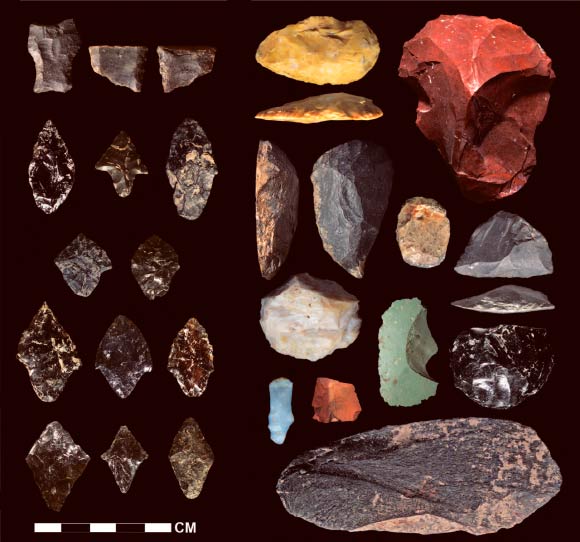
- Tools and Domestic Life: Excavations in residential areas have unearthed a variety of tools: grinding stones (batanes), spindle whorls (indicating textile production), and lithic tools. These artifacts paint a vivid picture of the daily lives, domestic economies, and craft activities of the inhabitants.
- Ceremonial Objects and Offerings: Discoveries within the platform structures, such as intentional burial deposits, small figurines, or specialized drinking vessels, shed light on the spiritual practices and the nature of public and private ritual life. These offerings often point to concerns about fertility, water, and prosperity.
- Skeletal Remains: Analysis of human remains, where found, can provide data on diet, health, social status (indicated by burial context or associated grave goods), and population demographics, helping to reconstruct the lived experience of the ancient people.
Interpretation of Architectural Layouts and Cosmology
Scholars interpret the site’s layout not just as functional design. But as a deliberate physical expression of cosmology and socio-political order.
- A Planned City: The uniformity in street planning and the clear organization of space—from the central ritual core to the surrounding residential blocks—suggest that Chuquihuara was a thoroughly planned urban center, not a haphazard accretion of structures. This level of planning requires a highly centralized administrative authority.
- Symbolic Geometry: The integration of geometric forms, particularly the contrast between the rigid squares of the residential/administrative areas and the sweeping circles of the plazas, may reflect a symbolic duality common in Andean cosmology (e.g., the male/female, high/low, public/private opposition). The alignment of the structures with celestial events (like solstices or equinoxes) or prominent geographical features (like mountain peaks). Is an ongoing area of study that would further cement the connection between architecture and spirituality.
- Hierarchy and Visibility: The placement of the stepped platforms ensures maximum visibility from the most sacred and politically important areas. The architecture literally dictates who sees and who watches, reinforcing the visual rhetoric of power and governance.
Preservation and Contemporary Challenges
The legacy of Chuquihuara is fragile. As an earthen architecture site in an active, naturally harsh environment, its continued existence requires sustained and innovative conservation efforts.
Threats to the Site: Environmental and Anthropogenic
The primary threats to Chuquihuara are multifaceted, deriving from both natural processes and human activity:
- Erosion and Climate Change: The most significant threat is the slow, inexorable process of wind and water erosion, compounded by the fragility of adobe. Increasingly erratic weather patterns linked to climate change—such as more intense rainfall events—pose a critical danger. As water penetration can quickly destabilize and dissolve the ancient bricks.
- Seismic Activity: Southern Peru is highly seismic. While the original builders employed clever techniques to mitigate this. Centuries of tremors have stressed the walls, making them vulnerable to collapse.
- Anthropogenic Activity:
- Looting and Vandalism: Illicit excavation (looting, or huaqueo) damages the structures and destroys the vital archaeological context of artifacts, robbing the site of its historical narrative. Vandalism, though less common, also poses a risk.
- Agricultural and Infrastructure Encroachment: The expansion of modern agriculture or the development of roads and infrastructure can threaten the integrity of peripheral, yet equally important, parts of the site.
Innovative Conservation Strategies for Earthen Heritage

The preservation of Chuquihuara requires a departure from traditional stone-centric conservation, employing methods tailored to earthen architecture:
- Stabilization and Re-Plastering: The most crucial strategy is the controlled restoration and stabilization of the wall tops to prevent water penetration and the subsequent “melting” of the adobe. This involves applying new, historically accurate mud plasters (sacrificial coats) that protect the original fabric.
- Environmental Monitoring: Continuous monitoring of microclimatic conditions (temperature, humidity, moisture content in the walls) is vital for early detection of deterioration risks, allowing conservators to intervene before significant damage occurs.
- Non-Invasive Documentation: Between the 11th and 15th centuries, Chuquihuara helped define the specific cultural identity and architectural tradition of the southern highlands—a tradition the Inca Empire later absorbed or suppressed during its expansion. This non-invasive documentation serves as a permanent record of the architecture. Should physical decay continue, and is invaluable for planning restoration.
- Community Involvement and Sustainable Tourism: Successful long-term preservation relies on the local communities becoming invested stakeholders. Programs that link preservation to economic benefits, such as controlled and sustainable cultural tourism. Provide incentive for local populations to protect the site from encroachment and looting. Training local residents as conservators and guides is a vital component of this strategy.
The Enduring Legacy of Chuquihuara
The story of Chuquihuara extends beyond its period of peak influence. Its lessons in adaptation, architecture, and governance continue to resonate today.
Insights into Pre-Inca Civilization and Regional Complexity
Chuquihuara fundamentally enriches our understanding of Andean cultures before the Inca ascendancy. Serving as a powerful corrective to a simplified, Inca-centric view of pre-Columbian Peru.
- Challenging the Narrative of Unilinear Development: The site proves that high-level, sophisticated urbanism and complex social structures were not exclusive to the Wari, Tiwanaku, or Inca. It underscores the regional diversity and the capacity of localized polities to achieve monumental architectural and organizational feats. The LIP was not merely an interregnum of chaos, but a period of intense regional innovation.
- Defining the Southern Peruvian Identity: Between the 11th and 15th centuries, Chuquihuara helped define the specific cultural identity and architectural tradition of the southern highlands—a tradition the Inca Empire later absorbed or suppressed during its expansion.
Inspiration for Modern Architecture and Sustainability
The ancient builders of Chuquihuara offer a profound masterclass in sustainable and climate-responsive design. That has caught the attention of contemporary practitioners.
- Climate-Responsive Design: The site’s lessons in managing thermal mass, orienting structures for climate control, and employing locally sourced, low-impact materials are highly relevant to modern sustainability goals. Chuquihuara is a powerful example of how to build large, durable structures using only the earth beneath one’s feet.
- Earthen Architecture Renaissance: As modern architecture seeks alternatives to high-energy materials like steel and concrete, the technical and aesthetic success of Chuquihuara’s adobe work inspires a renaissance in contemporary earthen construction methods globally. Architects are learning to blend traditional tapia and adobe techniques with modern engineering to create resilient, low-carbon buildings.
Cultural Tourism and Economic Potential
As Peru rightly promotes its extraordinary archaeological wealth. Chuquihuara is poised to become an important site for cultural tourists seeking a deeper. More nuanced understanding of Andean history.
- A Complementary Destination: While the global fame of sites like Machu Picchu draws mass tourism, sites like Chuquihuara offer a quieter, more intellectually rewarding experience. Promoting it as a key destination on a “Pre-Inca Trail” can help disperse tourism. Easing the pressure on more famous sites.
- Fostering Economic Development: The development of responsible, low-impact tourism infrastructure and services around Chuquihuara can provide sustainable economic opportunities for local communities, turning preservation into a viable economic activity and ensuring the site’s long-term protection through local stewardship.
Conclusion: Chuquihuara, A Sanctuary of Enduring Spirit
Chuquihuara remains a powerful symbol of human adaptation, organizational genius. And enduring creativity in one of the world’s most challenging environments. The citadel’s ability to not only survive but thrive in the arid. High-altitude desert for over four centuries is a tribute. To the deep ecological and engineering knowledge of its builders.
Through its imposing stepped platforms, its democratizing circular plazas. And its intricate network of enduring adobe walls, Chuquihuara tells a compelling, complex story. It is a narrative of regional power that balanced public ritual with private life. Sacred purpose with administrative necessity, and human ambition with environmental constraint.
As archaeological research continues to meticulously piece together. The fragments of this lost world and as preservation efforts intensify, Chuquihuara will continue to illuminate the rich, diverse. And often under-recognized tapestry of Peru’s ancient history. It stands as a vital, silent teacher, a monument to the enduring spirit of the pre-Inca world. And a reminder that true architectural genius often lies in adaptation and respect for the earth that provides.
ALSO READ: The Alhambra of Granada: A Dream in Stone of Islamic Art and Mathematics