A Mystery Carved in Wood and Time
In the world of archaeology, discoveries often raise questions—but few ignite imagination like the alleged ancient Egyptian airplane artifact. Described as a wooden object carved with meticulous hieroglyphs and shaped uncannily like a 20th-century aircraft, this relic challenges the very timeline of technological development. Unlike the well‑known Saqqara Bird—an artifact often cited in fringe theories linking ancient civilizations to flight—this airplane-like sculpture appears stunningly detailed, showcasing features reminiscent of a modern cockpit, stabilizers, wings, and aerodynamic proportions.
Mainstream scholars typically dismiss such objects as modern forgeries, misidentified ritual objects, or artistic creations. Yet its uncanny resemblance to a contemporary airplane raises a question that refuses to fade: could the ancient Egyptians have conceptualized flight in ways we’ve overlooked—or even lost?
This article explores the artifact’s origins, physical details, interpretations, controversies, and the broader question of how ancient cultures understood the sky. Through archaeological analysis, mythological context, and scientific critique, we delve into whether this object represents forgotten knowledge, symbolic storytelling, or merely the power of modern imagination imposed onto ancient forms.
What Exactly Is the So‑Called Ancient Egyptian Airplane Artifact?
A Description of the Object
The artifact is said to be made of lightweight wood, carved into a shape unmistakably reminiscent of a small modern aircraft. Visitors describe features such as:
- A pointed nose resembling a cockpit front
- Two angled wings with smooth edges
- Tail stabilizers similar to those on modern planes
- Hieroglyphs engraved across the body
- A streamlined aerodynamic profile far beyond known ancient designs
Placed in a museum-like environment among authentic Egyptian relics, this object blends ancient aesthetics with modern engineering in a way that seems almost paradoxical.
Comparisons to the Saqqara Bird
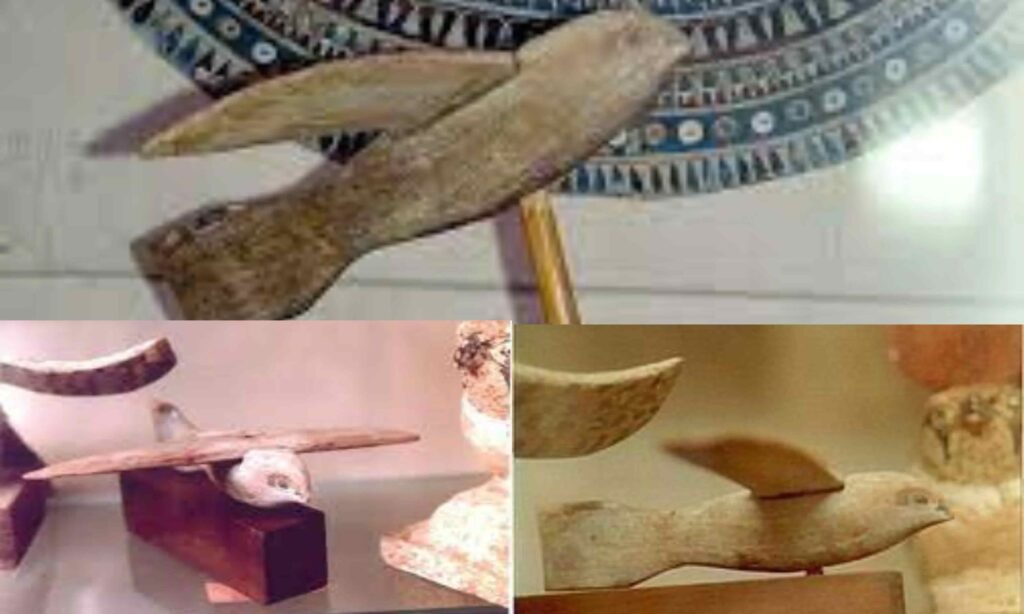
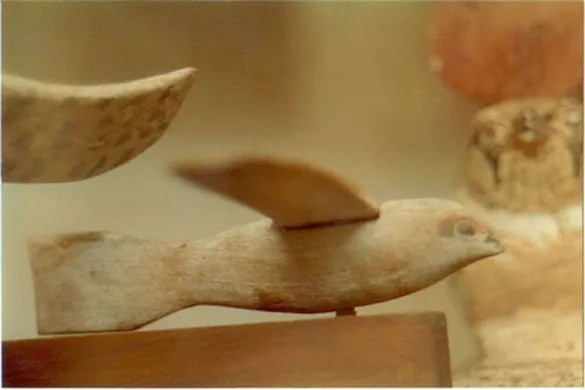
The Saqqara Bird—discovered in 1898 and dated to around 200 BCE—has long fueled debates. While most scholars classify it as a toy or ritual object, others argue it resembles a glider or conceptual model of early flight.
But this new artifact takes the idea further.
Where the Saqqara Bird offers ambiguous aerodynamics, the airplane artifact appears deliberately engineered. Its design displays an understanding of symmetry, lift surfaces, and aerodynamic efficiency unmatched by any other known ancient object.
This contrast intensifies the mystery.
Historical Context: Did the Ancient Egyptians Imagine Flight?
Egyptian Mythology and the Sky
Flight holds a symbolic place in Egyptian cosmology. Many deities are depicted with wings:
- Horus, the falcon god, symbolizes the sky and kingship.
- Isis uses her wings for protection and resurrection.
- Thoth, sometimes represented as an ibis, is associated with wisdom and cosmic knowledge.
Hieroglyphic writing itself includes flying creatures and symbols representing wind, air, and ascension.
But these depictions are metaphoric, representing spiritual transcendence, not mechanical flight.
The Idea of Lost Ancient Technology
Some alternative historians argue that advanced knowledge existed but was lost due to natural disasters, societal collapse, or restricted priestly traditions. Though mainstream archaeology rejects such ideas, artifacts like this airplane-shaped object continually reignite speculation.
However, there is no solid evidence that Egyptians developed mechanical flight—or even conceptual prototypes—beyond ornamental or symbolic art.
Physical Analysis: Could the Object Actually Function Aerodynamically?
To evaluate an artifact like this, researchers typically examine:
1. Aerodynamic Properties
If the artifact’s wings, body, and stabilizer align proportionally with modern aircraft design principles, it raises questions. Some enthusiasts claim the object’s structure suggests an understanding of:
- lift-to-drag ratios
- weight distribution
- symmetry for stability
- airflow efficiency
Even if scaled down, aerodynamic properties could be tested via 3D modeling or wind tunnel simulation.
2. Material Composition
Authenticating the artifact requires dating the wood. If it were truly ancient—over 3,000 years old—this would reshape our understanding of technological history.
3. Tool Marks and Carving Style
Experts analyze tool marks to determine:
- Were ancient tools used?
- Are there traces of modern machining?
- Do the hieroglyphs match authentic linguistic patterns?
4. Patina and Aging
Artificial aging is detectable. A forgery might mimic centuries of wear but reveal inconsistencies under microscopic analysis.
As of now, no peer-reviewed analysis confirms this object as ancient.
Possible Interpretations: What Could This Artifact Represent?
The artifact’s unusual design invites multiple interpretations—from conservative to speculative.
1. A Modern Hoax or Artistic Creation
This remains the simplest explanation. Museums and private collectors occasionally encounter modern objects inserted among ancient artifacts, either maliciously or as conceptual art.
Artistic reinterpretations of ancient themes are common. The object could be a deliberate fusion of aeronautical design and Egyptian aesthetic motifs, created to provoke thought or deceive.
2. A Misidentified Ritual or Ceremonial Object
Some ancient items seem modern only because we project contemporary ideas onto them.
For example:
- Boats were frequently depicted in Egyptian burial art.
- Miniature models of animals and symbolic objects were common.
Could the airplane-like shape be a stylized bird, boat, or religious icon? Without context, misinterpretation is easy.
3. Symbolic Representation of Mythological Flight
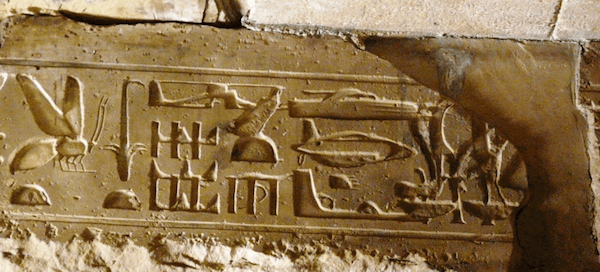
The wings of gods and the concept of spiritual ascension may have inspired artisans to create imaginative depictions of flight.
This artifact may symbolize:
- the soul’s journey
- celestial travel
- the flight of deities
4. Evidence of Proto-Aeronautics?
Fringe theorists propose that ancient civilizations possessed forgotten or suppressed technological knowledge—perhaps conceptual models of flight.
While no current evidence supports this, the detailed design of the object fuels interest.
5. Connection to Ancient Astronaut Theory
Ancient astronaut theorists suggest that early civilizations witnessed advanced machines, misinterpreting them as divine. If so, this artifact could be a representation—however distorted—of something witnessed long ago.
Mainstream archaeological consensus rejects this theory, but it persists in popular culture.
The Hieroglyphs: Symbolic, Ceremonial, or Technical?
One of the most intriguing aspects is the presence of authentic-looking hieroglyphs carved into the object. Their meaning, however, is ambiguous.
Possible Interpretations of the Inscriptions:
1. Ceremonial Text
Hieroglyphs on ancient objects often include standard offerings, prayers, or dedications. These could simply bless the object or assign symbolic meaning.
2. Artisan Signatures or Workshop Marks
Some inscriptions functioned like trademarks or signatures.
3. Symbolic Metaphors of Flight
Texts describing the soul’s ascension, the journey to the afterlife, or divine mobility could be mistakenly interpreted as technical notation.
4. Modern Fabrication
Hieroglyphs could be carved to imitate authentic styles. If they include anachronistic symbols or incorrect grammar, this would indicate a hoax.
Without scholarly translation or verification, their meaning remains speculative.
Why Artifacts Like This Fascinate Us
The Appeal of the Impossible
Humans are captivated by anomalies—objects that shouldn’t exist. They challenge assumptions and inspire wonder.
Our Desire for Alternative Histories
People often feel that history is incomplete or filtered. Anomalous artifacts offer a glimpse into what might have been overlooked or suppressed.
Technological Nostalgia
We project modern ideas onto ancient cultures, imagining them more like ourselves.
The Allure of Mystery
From the pyramids to lost civilizations, ancient Egypt remains one of humanity’s greatest enigmas. An artifact combining modern technology with ancient craftsmanship intensifies that fascination.
The Mainstream Archaeological Perspective
Most archaeologists approach such objects with skepticism—not out of dogma, but due to methodological standards.
Why They Reject Extraordinary Claims
- No evidence supports ancient mechanical flight.
- No similar artifacts exist within Egyptian material culture.
- Known technological levels of the time do not allow for aeronautical engineering.
- Modern forgeries are common in the antiquities market.
Science demands verifiable data, not speculation.
But Scholars Acknowledge the Value of Re-Evaluation
Even mainstream researchers admit that anomalies—whether hoaxes or misinterpretations—help refine archaeological methods and challenge assumptions.
Could This Artifact Rewrite History?
If proven ancient and authentic, the implications would be profound.
1. Technological Capabilities Would Need Reassessment
Egyptians may have held conceptual or experimental knowledge of aerodynamics.
2. Global Narratives of Invention Might Shift
Flight—currently documented as a modern invention—could have ancient conceptual roots.
3. Cross-Cultural Influences Would Require Re‑Study
Civilizations might have shared ideas more widely than previously known.
4. Mythology Might Reflect Real Events
Stories of gods “descending from the sky” could take on new interpretations.
ALSO READ: Los Guachimontones: Unraveling the Mystery of Jalisco’s Circular Pyramids